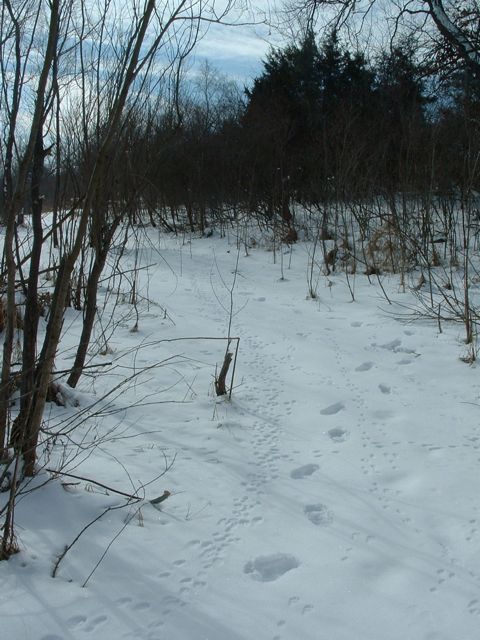
Now that the bunnies are pretty effectively excluded from the kitchen gardens, and their numbers greatly reduced from a year ago, they are cute again. The collapse of the rabbit population last fall through winter coincided with the residence of a gang of coyotes. Late in the winter only a few large rabbits remained in evidence on the whole 40 acres, and the coyotes were heard and their tracks seen less and less. A month after the dogs left we began to see little rabbits and now there are some third-generation individuals.
Just this morning, though, I found scat on the lane from something large that was full of fur... It was also full of coarse grass and looked like an attempt to purge. To hear tell, old rabbits mostly die from parasites.
But when they gather four or five at a time in the lane on the dam and take dust baths (fleas?), or graze on grass seed at the verge of the lawn and waterfront, or chase each other around one or another of the large trees, they're pretty cute.
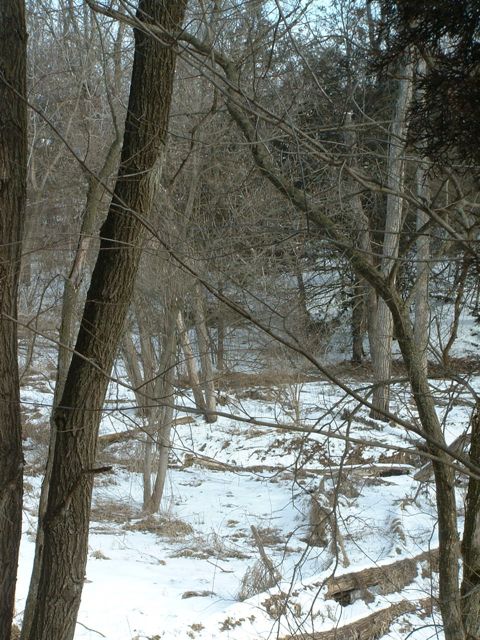
Good old Squeaky Tree, one of the bull bur oaks. The undergrowth in the woods, the unmanaged everywheres on the farm, are overgrown, rank and impenetrable. Most of the game trails that autumn's die down revealed are lost again. Even keeping to the extreme center of the groomed trails is no guarantee against finding a tick later.
It's a bass! Caught and photographed and released by Donna.
It's a rare day this spring and so far into summer that clouds of gnats are not a serious nuisance. A stiff breeze helps keep them from lighting, and Absorbine, Jr., but it's often so bad that they still get into the eyes and ears and nose and mouth and hair. Our expectation — ok, hope, really — is that drier weather less favorable to the gnats will predominate as summer progresses and we have more favorable outdoor work and recreation conditions.
Ruminations as we develop and manage a small farm in southeast Iowa. Click photos for larger images. Click here for farm map.
Showing posts with label wildlife. Show all posts
Thursday, July 4, 2013
Monday, April 1, 2013
Traces of Warmth
The first few freezing periods this winter made ice on the pond that was thick and clear and little marred by cracks. As the weeks passed, and with thawing periods and more snow and rain, the pond ice got more rotten and hoary. Still plenty thick enough to walk on but now with a rough surface, and spots where the cracks had met and vents formed. The level of the pond varied quite a bit over the season, up and down, and I think the vents formed to equalize water pressure below the ice. The animals seemed to know immediately once ice had formed that they could walk across the surface of the pond, and left tracks from one end to the other.
Donna's winter wonderland. Not shown in this photo is her ice fishing tent.
A curious find was this chunk of animal flesh, which was in the middle of the main trail through the woods and with no other sign around but a line of coyote tracks crossing the trail. It was a large piece, about eight inches by six inches, with stiff fur, and still fresh and flexible when I found it on my early morning walk, despite below-freezing temperatures. Not rabbit. Looked a lot like coyote. So, a mystery.
The smaller warmblooded creatures get out in the snow, but they go underneath, between the blades of grass. The mounds they push up warm and soften in sunlight, and collapse to form a groovy record of their travels. At least, that's what I think is going on.
Sunday, March 31, 2013
Fire Good
By small increments we prepare to put 150 cider apple trees in the northwest field at the end of April. Early on a calm Sunday morning three weeks ago we burned the large brush pile in the corner. This is what remained when I pulled all the metal and glass and every other damn thing from the burn-and-bury dump that had been there. And we'd added a lot of invasive mulberry and other matter that we'd cleared and trimmed elsewhere.
Cattle foraging on soybean stubble:
To the west and north of our northwest corner:
A diesel-soaked rag as a torch:
A few creatures, pheasant and rabbit and vole, abandoned homes in the brush pile, most before the fire but a couple rabbit not until the flames licked close.
These intriguing tracks, we finally concluded, represent the last steps of pheasant before their wingtips scrape the ground and they fly into the air:
It all went pretty quickly:
And that was that. But we've got a bunch of other brush piles...
Take a Morning Walk Through the Soundscape
Put on your headphones and spend the next 30 minutes walking a loop around the farm, through woods and across the creek and along the fences that border the meadows. Crunch through the last of the snow. Listen to birds of all sorts, sounds distant and near. Explore the soundscape through this audio verité field recording.
This is a rather quiet recording, so if there is very much noise in your listening environment, you'll hear the sounds of the farm much better if you wear headphones.
Morning Walk - 27 March 2013 by American Nacre
This is a rather quiet recording, so if there is very much noise in your listening environment, you'll hear the sounds of the farm much better if you wear headphones.
Morning Walk - 27 March 2013 by American Nacre
Thursday, March 28, 2013
An Expression of the Season
On February 28 and March 1 we had another substantial snowstorm, and afterward brilliant blue skies and calm winds and dazzling celestial displays in the night. I bundle up and take my walks, frequently stopped in my tracks by the impact of my surroundings: awe and joy at the perfection of form and texture, light and shadow, snatches of birdsong and the silences in between.
The east garden, its row of asparagus and the sweet potato mounds:
Squeaky Tree:
Lobster Tail Trail:
Toward the north fence line and the draws with coyote dens:
Big Bucket Trail:
The ancient hickories at Turkey Holler:
The Gorge:
The Grand Traverse:
Approaching Tire Shrine:
The Ford:
Hidden Meadow:
Across the top of the Trap Range:
Below the dam:
Rabbits congregate beneath this maple near the burn barrel:
The bridge-to-be, and across the dam, the pond and the terraced observatory field:
Wednesday, March 27, 2013
It Gives One Paws
Charismatic megafauna. That's what ecologists call those wild creatures at the top of their food chains. (As biologist Lewis Thomas notes in The Lives of a Cell – highly recommended, by the way – life is a game of 'now I eat you'.) And it's a continual wonder that these turkeys and coyotes and bobcats and horned owls and deer and falcons and buzzards exist here, such large animals, so close and yet so seldom seen. And still more I wonder that they find enough to eat and thrive; and about so much else that must perish to nourish them.
Wild turkey:
Bobcat:
Wild turkey:
Subscribe to:
Posts (Atom)